00:00 NANOTECHNOLOGY
00:00 Nano, what is nano?.
00:02 Think about the dimension for a coin and try to put them in
00:06 a path of 10 000 kilometres.
00:11 It comes from Greek word Nanos that means 'dwarf', a very little tiny creature.
00:16 Nano is that big!. We don't see.
00:18 One nanometer a ten minus nine meter.
00:24 Nano is in our body...
00:27 And we have this very special microscope, that you can see the signal atoms, and not only
00:31 see them, but you can also pick them up and move them or manipulate them.
00:37 So we can zoom into almost anything.
00:39 So it feels like you're walking into 'Lego land'.
00:43 So once we can know, understand and manipulate processes at the nanoscale,
00:48 we can reach some big technological advances.
00:51 In physics, chemistry, electronics, biology, medicine, energy, engineering...
00:59 From the moment that he woke up, and until we go to bed, it's a part of our life.
01:03 It's within a carton of milk and it's a coat on your sunglasses.
01:08 Nanofibers that make our jackets more resistant to water or to flame.
01:12 Nanocelluloses that they can be used as prosthesis.
01:18 If it wasn't for people having figured out how to put information into magnetic
01:22 nanocrystals, You Tube as we know it wouldn't exist.
01:26 Nano is that important because we are challenging huge problems like
01:31 climate change.
01:32 Imagine using the excess waste heat from an exhaust engine to power your mobile phone.
01:37 This is where Nano plays a key role for cleaning up the environment, cleaning of gases,
01:40 cleaning of waters.
01:44 But it's much more important in the direction of medical diagnostics, medical therapies.
01:50 The aim of this research is to find new mechanism and develop new drugs
01:54 to cure diseases such as cancer.
01:59 NANOGUNE
02:06 The idea came out in 2005.
02:09 At that time the Basque Government was interested in opening a new centre
02:14 at the forefront of nanoscience and nanotechnology.
02:18 Pitarke accepted to be the director and elaborated a project in 2005
02:23 and... here we are.
02:28 I've been very impressed with the speed with which the centre has been built
02:33 up over the past decade.
02:35 The resources that people provided and most of all a very excellent staff
02:40 which Txema and Pedro have assembled.
02:46 We have about 100 people in 10 research groups.
02:53 The collective group of nanoGUNE are key in our success, but always
02:57 behind a collective group is healthy there is a leader, and I think nanoGUNE we will have
03:02 not reached the level it has had, without the tenacity, the will and the power
03:07 and also the intellectual vision of his director, Txema Pitarke.
03:13 We've started contract research with the industry, locally
03:17 and worldwide.
03:19 Having a centre like nanoGUNE in the Basque Country is great because it's filling the gap
03:23 between the research science agents and industry.
03:28 I´m working in a collaboration with Intel. This gives me another perspective of my work
03:32 because it also looks more to the application wise and what is the importance for them.
03:38 Intel research together with nanoGUNE, will open new ways of detecting spintronic
03:43 states and manipulating them, for application in computing logic and memory.
03:50 The nanoGUNE-Intel partnership can play an important role in this revolution.
03:58 We've been found in new startup companies.
04:01 The first company who created was Graphenea, that is a worldwide
04:05 leader in the production of graphene.
04:10 It is very important to have research centres in different disciplines.
04:15 For example, in the case of Graphenea, without nanoGUNE we wouldn't exist.
04:22 DESPEDIDA
04:24 Here we have people from about 25 different countries worldwide.
04:39 The most gratifying anything of coming back home is to apply all the experience and
04:44 knowledge I'll gain all those years abroad, here, home.
04:53 State of art equipment is certainly a must, but having
04:58 collaborative environment that we have here is probably a plus,
05:02 a big plus.
05:07 The culture of this century will be scientific and technological, and only the societies
05:12 who are aware of this fact, will be protagonists of their
05:17 own future.
05:20 All I can wish to them is to further develop the way they have been started.
05:24 So all the best for the next whatever years 10, 20,
05:29 30, and so on.

 ICAA | Día del Cine Español 2026 - spot
00:30
 MPDL | Awareness workshops
04:03
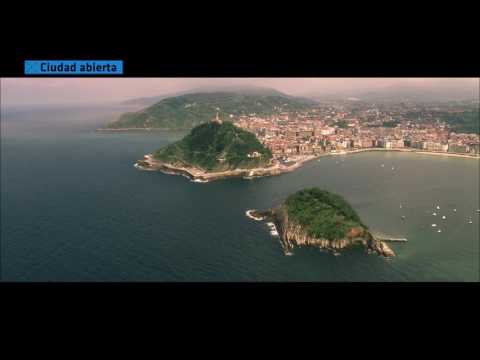 San Sebastián Connecting Talent
02:08
Sister Party 03:27
 A stroll through Córdoba
06:51
Nueva Línea 03:56
Gipuzkoa + 20 03:56
Kosmodisea 02:00
 Campo Viejo | Grape varieties in La Rioja
00:21
 Campo Viejo | Red, white and rosé wine
01:48
 Campo Viejo | False myths about wine
02:50
 Campo Viejo | Areas of La Rioja
00:35
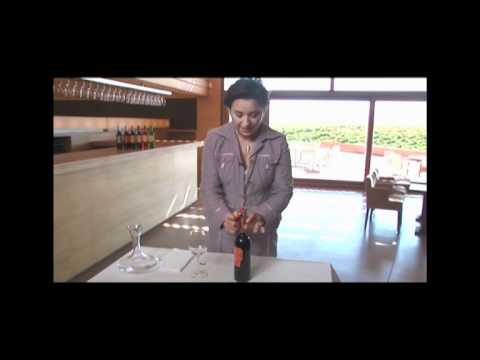 Campo Viejo | Storing and serving wine
02:27
 Campo Viejo | Crianza, Reserva and Gran Reserva
00:47
 Campo Viejo | From the barrel to the bottle
02:04
 Campo Viejo | How to conduct a wine tasting?
06:49