00:09 I remember the first Godard's film I saw
00:12 and that brought about an important change.
00:15 At that point I thought I wanted to be in that world,
00:20 close to that world, one way or another,
00:22 not necessarily in a professional way,
00:25 it was not possible for me.
00:27 But I knew I had caught it.
00:38 It would have been much harder to start in Europe
00:40 than trying in Latin America,
00:42 because there are many virtues,
00:46 many more difficulties.
00:47 In my experience in Mexico
00:49 I have had to invent a way in less sheltered conditions,
00:53 in certain cases, to maintain the projects,
00:57 to create the projects, to set up the projects.
01:01 And that has involved a lot of physical effort,
01:05 a lot of willingness and, at the same time,
01:08 that stimulated a lot of creativity and energy
01:12 to be able to solve, one way or another,
01:16 without resources or with low resources, and to be able to organise events.
01:21 And that's one of the learnings
01:24 I've taken away from Austria,
01:27 where I feel I arrive with extreme creativity
01:30 regarding the conditions
01:32 to which the others are accustomed,
01:35 and also with much more availability
01:40 and a little bit more risk-taking spirit.
01:52 FICUNAM was imagined, I imagined it from the beginning related to UNAM.
01:57 They are two inseparable elements: the festival and the university.
02:01 Working with the UNAM, which is one of the institutions that represents
02:05 stability on the one hand and the search for a certain social equality on the other hand.
02:12 or social redistribution through education,
02:15 always reminds me
02:17 how important it is to dedicate oneself seriously,
02:20 with maximum effort,
02:23 to any kind of project,
02:26 large or small.
02:35 With all that yelling,
02:37 with so much noise around so much film production,
02:40 cultural in general,
02:43 I think that criticism is one of the channels that allow for
02:46 certain cinema to have more visibility,
02:49 or more serious visibility,
02:52 or visibility on the correct channels
02:54 outside the country where it was produced.
02:55 Criticism works in a similar way
02:58 to certain festivals
03:00 that work with a certain editorial intention,
03:03 who also have that function of connecting
03:06 with whoever you want to recognise yourself in that proposal,
03:08 and find other things through those voices.
03:14 They're a bit of an ambassador.
03:23 Festivals will continue to be a key moment
03:27 for the promotion and dissemination of cinema
03:30 and film culture,
03:33 as long as they keep their relationship with their audience very real,
03:36 with a community to serve.
03:38 While on the one hand it's important to create spaces,
03:41 niches and voices for different and dissident voices,
03:45 on the other hand, there is also a public and non-elitist function,
03:49 a function of sharing with society
03:52 cultural events for those who organise them.
03:56 And you need to work with new generations
04:00 facing new habits and trying to open doors,
04:05 breaking barriers and learning to communicate.
04:13 Festivals create community per se with examples
04:17 and creating that social network of connection between the audience,
04:21 an audience that can become a creator
04:24 and the organisation itself.
04:31 And it happens, it happens with the schools,
04:34 with initiatives that modify or that lead to a proposal that didn't exist,
04:37 and when it can be intertwined with the spaces,
04:41 it happens that new communities are created.
04:44 It happened here in San Sebastian.
04:47 I think the school (EQZE) is an external element,
04:51 an activity that didn't exist,
04:53 related to establishing a new space
04:58 for different cultural expressions and activities,
05:02 also elements that did not exist in that form before.
05:06 and has summoned people in other ways to attend
05:10 the proposed activities,
05:13 which are then intertwined with the life of the organising institution,
05:17 as well as the things that happen around it, in the urban space
05:20 and it's even motivated people to move to live here.
05:33 I don't have the experience of living here all year round,
05:35 but I have an intuition that I don't necessarily
05:39 the whole neighbourhood around Tabakalera is recognisable in the centre,
05:42 and it's a bit of an intimidating tower
05:45 because of the cultural approach it has,
05:48 for being a new element that sometimes takes time.
05:53 to be recognised as a part of social life,
05:57 beyond cultural life.
06:05 It is important to keep
06:07 with a quality proposal, as it has in all the different areas,
06:10 together a lot of different and interesting projects, like artist residency,
06:15 as an exhibition space, as a seat of the administration, as an exhibition space.
06:19 or the Festival offices, and because it has a school,
06:24 which I think brings a special richness,
06:27 brings a very interesting internationality.
06:34 I think it's great to combine the three cinematic beats,
06:38 to have both archiving and creation and curating as the main axes.
06:43 In addition, all the research that is developed
06:48 beyond seminars, courses and training,
06:52 and so it also promotes longer-term projects,
06:57 that can also have an impact on other institutions of the same type,
07:01 both educational and cultural dissemination.
07:04 As well as producing talent in their training,
07:06 which also produces films that are beginning to circulate, it in turn calls upon
07:11 professionals, teachers, film directors in teaching,
07:18 that creates another dialogue with many sides of the world
07:23 and Europe in particular,
07:27 on an artistic and professional level,
07:30 who automatically become ambassadors
07:33 and they get the word out, and then it's already a place
07:36 that's known everywhere.

 Tabakalera-denbora | Vincent Maraval
09:44
 Tabakalera-denbora | Uxue Alberdi
08:14
Tabakalera-denbora | Ted Hope 08:53
 Tabakalera-denbora | Susanna Tesconi
09:20
 Tabakalera-denbora | Ricardo Díez Muiño
11:15
Tabakalera-denbora | Niño de Elche 08:48
 Tabakalera-denbora | Maria Ptqk
09:47
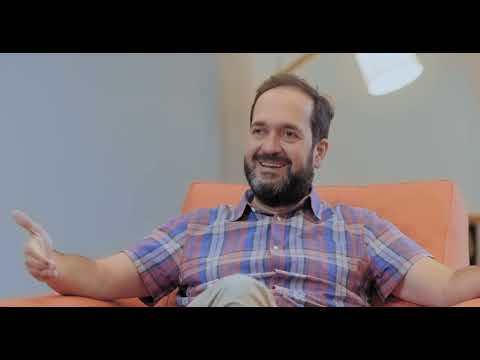 Tabakalera-denbora | Marcos García
08:49
 Tabakalera-denbora | Jone San Martín
10:07
Tabakalera-denbora | Jon Cazenave 07:43
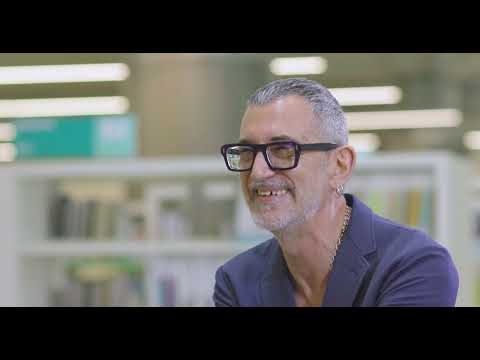 Tabakalera-denbora | Javier Pérez Iglesias
07:49
 Tabakalera-denbora | Isabel Herguera
11:12
 Tabakalera-denbora | Helena Taberna
08:28
Tabakalera-denbora | Frédéric Martel 09:04
Tabakalera-denbora | Dea Kulumbegashvili 09:47
Tabakalera-denbora | Christine Vachon 07:26