00:09 I remember when I was playing Chinese jump rope,
00:12 my aunt Mari Paz said:
00:15 “that girl needs to go dance”.
00:19 That’s when I thought:
00:22 “someone realised, they could tell”.
00:33 Classic dance can be used for contemporary dance,
00:37 and contemporary dance for classic dance.
00:39 That is to say that ultimately they are techniques,
00:43 although it is true that each requires
00:46 a different presence on stage.
00:49 I think that I saw myself more,
00:52 and see myself more,
00:54 in contemporary dance,
00:56 but it’s a discipline I won't give up
00:59 because the good part about classic dance
01:02 is that it is quite utopian.
01:04 You're always trying to do something impossible,
01:08 but it’s not something you cast aside.
01:11 The next day, you try again and again.
01:14 It’s not that you're stupid,
01:17 but rather the precise act of replicating the model
01:20 is what gives you the information.
01:25 William Forsythe is a choreographer
01:29 that danced with the Joffrey Ballet.
01:31 Then he was in the Stuttgart Ballet,
01:34 and after that he was named Director of the Frankfurt Ballet
01:39 before founding The Forsythe Company in 2005.
01:43 I was already with my friend and colleague
01:47 Jacopo Godani in Brussels.
01:52 Jacopo spoke to me quite a bit about Forsythe.
01:56 We came to San Sebastian to ‘Maiatza Dantzan’
02:01 with one of Jacopo's choreographies,
02:03 and Hilde Koch was also there.
02:05 At that time, Hilde was dancing with the Frankfurt Ballet
02:09 and she told us:
02:13 “you should come audition”.
02:16 What more could a blind person want than to see?
02:18 We picked up the car in Brussels and rolled into Paris,
02:23 because they were performing in Châtelet at the time.
02:26 We went to take a class,
02:28 he came to see us,
02:30 we learned part of the piece.
02:32 Hilde brought us on stage,
02:34 he looked at us, and:
02:36 “Welcome to the Frankfurt Ballet”. Incredible.
02:50 At the age of 32,
02:53 the world starts speaking softer all of a sudden.
02:57 So it is also a change of direction,
03:01 of accepting that you are yourself and no one else.
03:09 It is a change in personality.
03:12 You stop being what you are.
03:15 Personally, it took me three years to make that full change.
03:23 A very close friend of mine, Kate Strong,
03:25 who also has hearing problems,
03:28 said to me
03:30 “It’s a gift”.
03:32 I said: “How could you say something like that?”.
03:36 And now I can correct myself and see:
03:39 It’s a gift”.
03:45 Something is taken from you
03:48 and it means you have to make up for it
03:51 by opening up much further,
03:54 and you realise that there are many ways of communicating.
04:03 ‘Aditu’ was born out of a situation
04:07 where two children came to take a dance class
04:11 for the hard of hearing in Dantzagunea.
04:16 Through them, we have been earning the trust of the deaf.
04:25 Being able to perform here at Tabakalera,
04:30 and then being able to present it in the Patio is quite the luxury.
04:34 ‘Aditu’ is a piece that is derived precisely
04:38 from the fact that I am partially deaf,
04:47 and my fascination with silence,
04:52 physical communication
04:55 and sign language's physicality,
04:59 and the level of physical
05:04 and emotional expression it entails.
05:09 Likewise, how we can play with dance
05:13 and this language, with how we understand each other.
05:16 And, in a certain way,
05:20 reclaiming the state of language that is dance,
05:25 without the need for musical accompaniment.
05:28 We have worked with Mikel R. Nieto.
05:31 Mikel is a sound artist,
05:34 and we have been working together for about 7 years.
05:38 As a sound artist, Mikel returns my hearing to me,
05:42 and is a person that also loves working with silence.
05:55 It is quite emotional
05:59 to see that you can move
06:02 and then there is an echo on the other side.
06:10 In the end, I believe
06:12 we do this for that reason,
06:13 to create. It’s that simple.
06:21 When she went on stage,
06:25 Kate Strong was so touched
06:28 to see that the audience had reacted
06:34 that she started to cry.
06:40 She is deaf as well.
06:44 “I had never felt that on stage before, Jone.
06:47 And I’ve been on the world’s best stages
06:50 for 40 years”.
06:55 It was the fact that we dared to put ourselves out there,
07:03 people had listened,
07:06 and it had spoken to them as well.
07:08 She would say to me:
07:11 “it’s our people”.
07:14 And that was quite beautiful.
07:24 At 4am on 13 August
07:29 (the second performance was on the 12th),
07:34 Kate and I got in a taxi in Frankfurt.
07:38 She went on to Berlin,
07:40 and I to Ulan Bator in Mongolia
07:45 to work on a project that was also with deaf children,
07:49 deaf adolescents, and child dancers.
07:56 We understood each other, and they understood each other.
07:59 The most beautiful part was
08:02 how these children that didn’t know each other
08:04 could work together.
08:07 Plus, the hearing children
08:09 didn’t know sign language.
08:11 And there was a... that’s it.
08:15 That’s the way we truly want to live.
08:19 It’s not about this or that
08:23 but through unity with all of our differences
08:26 being welcome whatever they are!
08:28 Actually, the hearing children
08:31 left being able to speak sign language,
08:33 being able to communicate with the others.
08:36 The deaf adolescents dancing,
08:39 even though they were not dancers.
08:41 The exchange was fantastic,
08:45 so genuine, honest, and fun.
08:57 I like everything about Tabakalera.
09:00 The space, how it opens up, what it offers,
09:04 the movement there is,
09:07 the ability for us to be with everyone working here at once,
09:13 and the possibility of having these interferences.
09:18 The fact that we can welcome the public,
09:21 go upstairs, and see San Sebastian
09:25 from a new perspective,
09:28 how the light comes through.
09:30 It is a space where
09:32 everything truly flows, and it flows a great deal.
09:35 On an energy level, I also believe
09:38 that a space as charged with art
09:41 and offerings needs that;
09:43 it needs to be a place where people can come and go,
09:46 and also make decisions inside the space to see
09:50 what paths things take, and what paths they don't.

 Tabakalera-denbora | Vincent Maraval
09:44
 Tabakalera-denbora | Uxue Alberdi
08:14
Tabakalera-denbora | Ted Hope 08:53
 Tabakalera-denbora | Susanna Tesconi
09:20
 Tabakalera-denbora | Ricardo Díez Muiño
11:15
Tabakalera-denbora | Niño de Elche 08:48
 Tabakalera-denbora | Maria Ptqk
09:47
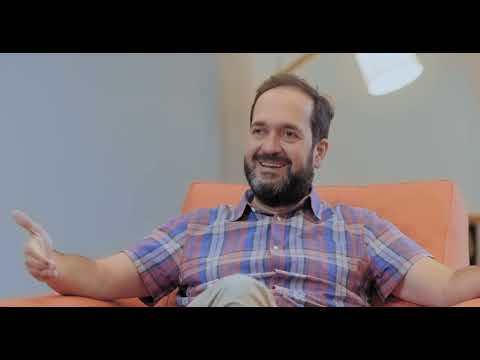 Tabakalera-denbora | Marcos García
08:49
Tabakalera-denbora | Jon Cazenave 07:43
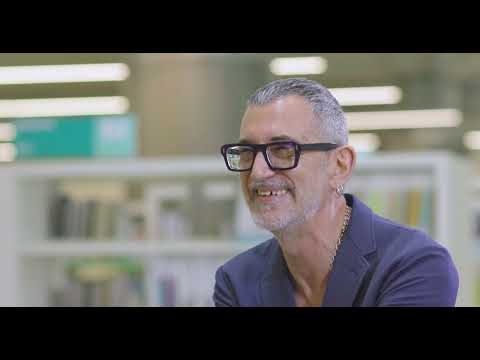 Tabakalera-denbora | Javier Pérez Iglesias
07:49
 Tabakalera-denbora | Isabel Herguera
11:12
 Tabakalera-denbora | Helena Taberna
08:28
Tabakalera-denbora | Frédéric Martel 09:04
 Tabakalera-denbora | Eva Sangiorgi
07:55
Tabakalera-denbora | Dea Kulumbegashvili 09:47
Tabakalera-denbora | Christine Vachon 07:26