00:12 As a child, I was bored out of my mind.
00:16 I was also a bit introverted,
00:18 I found it difficult to relate to others,
00:22 and as in most cases,
00:26 or at least in many of them,
00:29 literature has been the way to talk to others,
00:33 not to be alone, to be accompanied.
00:45 There is a strong tendency that pushes us to deal with art,
00:48 culture and creation like any other product,
00:52 you only have to look to see it.
00:54 In my opinion,
00:55 it's not a quick consumption thing,
00:58 it is not a quick build.
01:00 We don't write stories or fast movies.
01:07 Art needs its space,
01:09 its time, its pause, its rhythm,
01:12 to make it authentic,
01:14 to be transformative, to generate dialogue,
01:17 so that it doesn't just stay in the pretty coloured bulbs
01:21 that we see in all the hipster bars.
01:23 Talk about dialogue,
01:25 of ways of getting to another place through art or creation.
01:39 We need active people.
01:41 What are active people?
01:43 Those who don't take what they're given at face value.
01:48 The active reader knows,
01:51 because he has lived a process as a reader or a spectator or an art lover,
02:00 making connections between books.
02:05 It is able to go beyond one book,
02:08 beyond a text, beyond a word,
02:11 beyond an idea, beyond a headline.
02:14 That's an active reader,
02:17 but it should be helped to cultivate it,
02:20 and I think it's very difficult.
02:23 The current education system doesn't do it, it's clear that it doesn't.
02:32 On the one hand, I've been a very good student,
02:39 but on the other hand, I don't remember anything.
02:41 I don't remember anything, neither history nor mathematics.
02:48 I don't remember anything.
02:50 Nothing at all.
02:55 I don't know, it didn't leave a trace on me.
03:00 I'm very very critical.
03:02 I'm a teacher, and I'm still very critical.
03:07 I consider that I know the system well
03:09 and I am very critical of it
03:13 and also of our work.
03:17 I don't think it's given the importance it deserves.
03:26 It's not enough to just gobble up the information and know how to do tests.
03:29 It's more than that. It's about taking from here and there:
03:31 from the teacher's words, from the notes in the notebook,
03:35 from the opinion of the person next to you, and from your own opinion,
03:38 and lighting little fires.
03:44 What we learnt has to stay somewhere in our body,
03:48 not only in our memory,
03:49 in the material to do a test or in the detritus that goes to the rubbish.
04:00 I think at the moment the culture,
04:04 creation and art are in a very critical situation.
04:09 They are becoming orphaned, if they are not already,
04:13 so I don't know what function spaces like this will have in the future.
04:19 I hope they don't remain mere showrooms,
04:23 in shopping centres built in the name of art.
04:29 I would like them to be places for the promotion of culture,
04:35 creation, debate, criticism and diversity of experiences.
04:42 But in order to do that, you have to let them be,
04:45 and you have to take risks.
04:50 It seems to me that there is a time coming when people are afraid of debate,
04:59 and we're seeing it already.
05:02 The risk is that it's going to go higher,
05:05 because without debate there is no change,
05:08 no progress, no health.
05:12 There is nothing.
05:17 That scares the hell out of me and I think spaces like this,
05:19 but not just them, of course not,
05:22 can contribute, precisely, to breaking those limits.

 Tabakalera-denbora | Vincent Maraval
09:44
 Tabakalera-denbora | Uxue Alberdi
08:14
Tabakalera-denbora | Ted Hope 08:53
 Tabakalera-denbora | Susanna Tesconi
09:20
 Tabakalera-denbora | Ricardo Díez Muiño
11:15
Tabakalera-denbora | Niño de Elche 08:48
 Tabakalera-denbora | Maria Ptqk
09:47
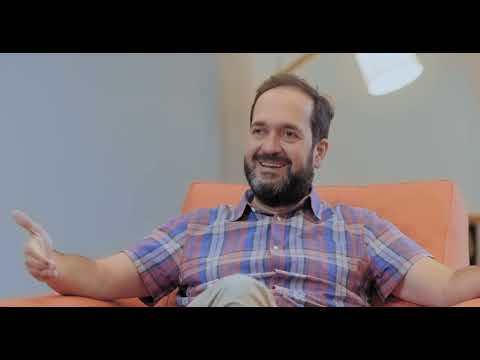 Tabakalera-denbora | Marcos García
08:49
 Tabakalera-denbora | Jone San Martín
10:07
Tabakalera-denbora | Jon Cazenave 07:43
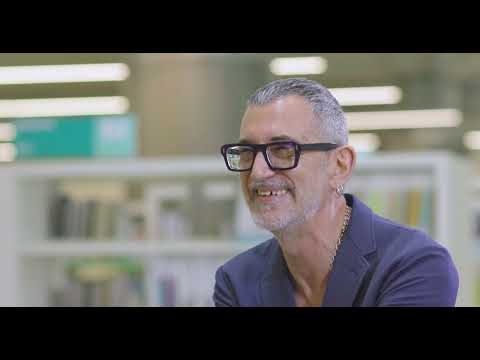 Tabakalera-denbora | Javier Pérez Iglesias
07:49
 Tabakalera-denbora | Isabel Herguera
11:12
 Tabakalera-denbora | Helena Taberna
08:28
Tabakalera-denbora | Frédéric Martel 09:04
 Tabakalera-denbora | Eva Sangiorgi
07:55
Tabakalera-denbora | Dea Kulumbegashvili 09:47