00:17 I always thought that I would be a writer.
00:18 I always imagined myself writing and drawing.
00:22 Then, somehow,
00:23 I realised that film would let me do a little of everything.
00:31 I imaged film as a form of writing,
00:34 and later I would discover that there are different ways,
00:36 perhaps more similar to poetry, essays,
00:38 or first-person journals,
00:40 and that it could all be mixed together.
00:42 I discover all of this when I was studying.
00:44 I began to see different things,
00:45 and my world expanded.
00:50 I was a teacher for many years.
00:52 I started quite early,
00:53 and it was useful
00:56 when it came to organising my ideas, thinking more deeply,
00:58 structuring, and exchanging them.
01:00 That moment when you put yourself in front of so many students
01:05 and tell them something, there is an exchange of ideas.
01:19 “Perhaps the work of a teacher
01:20 is more about pointing out windows and doors
01:23 so each student
01:25 can go towards the one they can or want.”
01:35 In a certain way, while teaching,
01:37 I thought quite a bit about the types of professors that I had had,
01:38 and those that had taught me so much.
01:41 I think they are people that ultimately
01:43 have a lasting impact on your life.
01:44 It is much the same with the programmers.
01:46 All of a sudden, a programmer that shows you
01:48 a filmmaker at just the right moment
01:50 can change your entire style
01:52 and your way of understanding film.
01:54 In the case of Tabakalera, which is a place where there are both programmers
01:57 and professors all working together,
02:00 it is something quite natural and very special.
02:07 I believe that everything that is a crossroads ends up as something incredible,
02:09 because it makes you think and feel differently.
02:11 In the end, that is what art is for.
02:14 That inspires me deeply,
02:15 for example.
02:16 When I have worked with painters, musicians or architects,
02:19 there are always so many things
02:21 that I can translate for use in film,
02:23 and like all translations,
02:25 you gain some things and lose others...
02:26 There are things that are lost along the way.
02:32 When you work with another person,
02:33 not just painters or architects,
02:35 even actors,
02:36 the director of photography, the editor...
02:39 You always end up finding common ground,
02:42 making you something that isn’t entirely you,
02:44 that you have to find
02:45 without losing sight of yourself,
02:47 in that space where you blend into the other:
02:48 the director of photography, the sound engineer,
02:50 the editor...
02:52 and in the end, I think that is the most fascinating thing about film.
02:58 I have always thought about film precisely
03:00 because of its simultaneous artistic, narrative, and multi-poetic capacity.
03:05 It is an art that was born so late that it came into the world already contaminated,
03:07 infected with all other disciplines.
03:12 It is an art that was born stealing the frame of painting,
03:15 taking from theatre, robbing from opera,
03:18 picking from music even before film had sound.
03:25 It seems to me that these are such old paths,
03:26 that we are not actually doing anything different than
03:29 what Lumière, Agnès Varda, or Jean Vigo were doing...
03:34 Nuances change,
03:36 but the important part was already in these films.
03:43 One of the conflicts when you make films
03:45 with open scripts and other people that are not actors
03:48 is not so much how to resolve sequences,
03:50 but rather the problem of discovering what the film is.
03:52 You don’t know what film you are making
03:53 until the process is quite far along,
03:56 and I think that results in high anxiety,
03:58 at least for me.
04:00 When I have made fiction films,
04:01 more traditional/conventional narratives,
04:04 the process has been much easier and light
04:06 than when we have made films like 'Between Two Waters’,
04:08 'La Leyenda del Tiempo' or 'The Double Steps',
04:11 that carry much greater tension of uncertainty
04:13 and emotional involvement.
04:17 I think they are films that you can do once every 10 years or so,
04:21 because if not, it would destroy you...
04:23 At least it would me.
04:37 It is a film that we have made as a family over the course of many years,
04:40 it is a film that I started 14 years ago in 2004.
04:47 In the end, I think that realism
04:49 is always a pact with the viewer;
04:51 it is a linguistic convention that changes in function of the era.
04:54 What was considered realist film in the 1940s and 1950s
04:57 we now see and it seems extremely well-lit and sophisticated.
05:02 We see the ‘seems’ of the conventions.
05:05 Certainly in 15-20 years
05:07 they will look at today’s realist films and say:
05:09 “wow, look at how used the hand-held camera,
05:12 how they used that kind of light…”.
05:14 They will see quite clearly that they are aesthetics of a given moment.
05:29 Sometimes the first instinct is the desire to film someone;
05:32 a specific person or place.
05:35 Sometimes it has been the need to tell a story or tale.
05:39 Sometimes there are formal concerns,
05:42 sometimes I’ve made pieces because I wanted to try and see what happens
05:45 when you have a specific formal device...
05:47 in film perhaps less.
05:49 When I have created installations, I have rather enjoyed,
05:53 for example, making rooms where you have four screens
05:56 so that you can never see everything,
05:58 and have to choose where you look as a spectator.
06:00 It would be somewhat of a culmination of this idea:
06:03 there is no single reading,
06:05 but rather you have to decide which is yours.
06:14 I understand this shyness that people have when it comes to saying they are artists.
06:17 It is a shyness that sometimes comes from the idea
06:19 of the exalted artist that lives in an ivory tower,
06:22 and it seems like saying “I’m an artist” sounds somewhat pedantic,
06:25 when we should really remember that it is often times quite traditional work.
06:29 I really defend this idea of work,
06:32 be it manual or not, and the work that gives you pleasure while you're doing it,
06:36 marrying into it when you were a child
06:39 drawing on the floor,
06:41 without really understanding why so many of us stop
06:44 and leave it behind when we reach adulthood.
06:46 For me, it is a continuation,
06:48 and in this sense, being an artist
06:50 isn’t pretentious and doesn’t involve false modesty... It is what it is.
06:58 I think that the most special thing about Tabakalera is how it has been able to become
07:00 a space where people can come have some pintxos.
07:04 This may sound a little trivial,
07:07 but I think that’s really important.
07:08 People don’t go to the Reina Sofía Museum or the CCCB to eat pintxos,
07:13 and the difference is that
07:14 these people who would have never gone to someone’s exhibition
07:18 might end up going because it’s 10 metres away from their pintxos.
07:22 They might end up seeing things that they would have never seen
07:24 if this meeting space for leisure
07:26 and having a nice time didn’t exist.

 Tabakalera-denbora | Vincent Maraval
09:44
 Tabakalera-denbora | Uxue Alberdi
08:14
Tabakalera-denbora | Ted Hope 08:53
 Tabakalera-denbora | Susanna Tesconi
09:20
 Tabakalera-denbora | Ricardo Díez Muiño
11:15
Tabakalera-denbora | Niño de Elche 08:48
 Tabakalera-denbora | Maria Ptqk
09:47
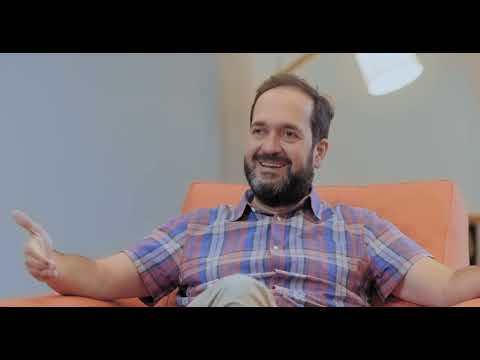 Tabakalera-denbora | Marcos García
08:49
 Tabakalera-denbora | Jone San Martín
10:07
Tabakalera-denbora | Jon Cazenave 07:43
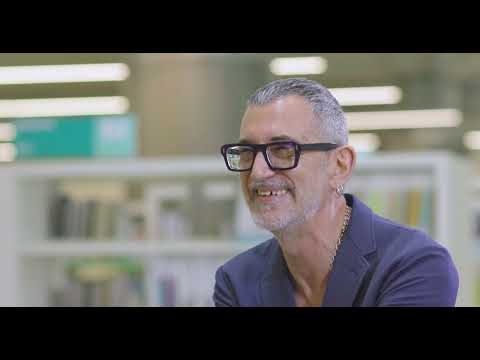 Tabakalera-denbora | Javier Pérez Iglesias
07:49
 Tabakalera-denbora | Isabel Herguera
11:12
 Tabakalera-denbora | Helena Taberna
08:28
Tabakalera-denbora | Frédéric Martel 09:04
 Tabakalera-denbora | Eva Sangiorgi
07:55
Tabakalera-denbora | Dea Kulumbegashvili 09:47